
Meadowmat outperforms competitors...
Why Meadowmat outperforms competitors scientifically, ecologically and practically.
Creating a wildflower meadow should be one of the most rewarding garden projects you can undertake. Fundamentally, meadows support pollinators, increase biodiversity, improve soil health and deliver a natural aesthetic that evolves beautifully through the seasons.
But how you choose to establish a meadow determines whether it becomes a thriving habitat — or a disappointing patch of grass.
Typically, today customers typically face three options:
- Wildflower seed
- Competitor products sold as “species‑rich” or “biodiverse” turf
- Harrowden Meadowmat
Although these options may appear similar, the results they deliver are dramatically different. Meadowmat is engineered from the ground up to behave like a true wildflower meadow, not a lawn — and that distinction matters.
So, below we explore the key differences and explain why Meadowmat consistently delivers higher biodiversity, better establishment and a more resilient long‑term meadow.
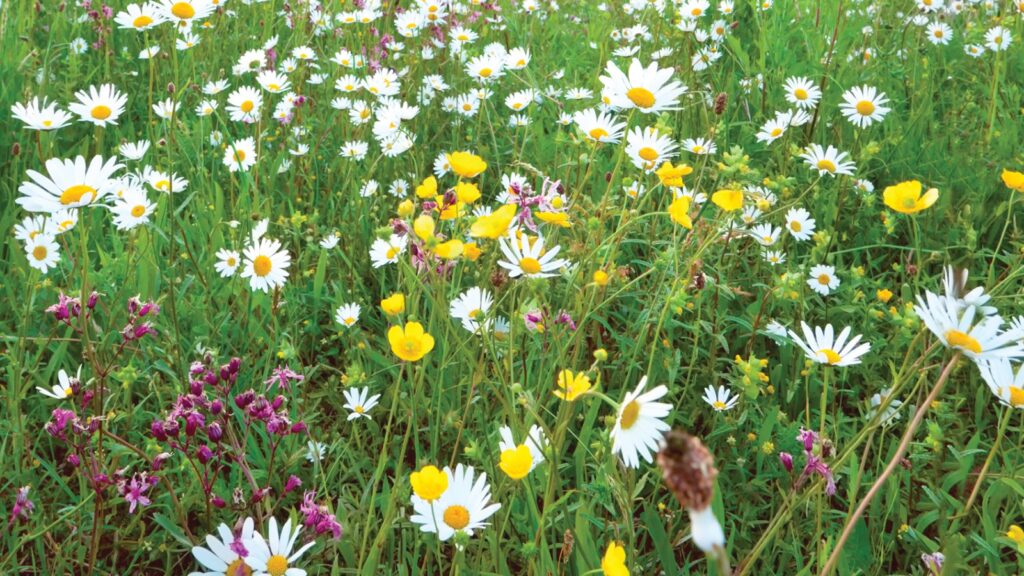
Establishment: Meadowmat Gives Instant, Reliable Results - Wildflower seed is slow, unpredictable and labour‑intensive.
Establishing a meadow from seed requires:
- A perfectly prepared, weed‑free seedbed
- Low‑nutrient soils
- Multiple rounds of weed control
- 1–3 years before the meadow looks established
But even with perfect preparation, germination depends on the weather. So it can be patchy. Many seeded meadows fail entirely or become dominated by coarse grasses and weeds.
Competitor “species‑rich” turf establishes quickly — but not as a meadow
Because these products are grown like lawn turf, they provide instant green cover but:
- Contain high grass content
- Lose wildflower diversity quickly
- Behave more like a lawn with flowers than a meadow
Meadowmat establishes instantly and reliably
Meadowmat arrives as a mature, pre‑grown wildflower sward and once laid:
- It roots quickly
- It suppresses weeds
- It delivers immediate visual impact
- It behaves like a meadow from day one
So there is no bare‑soil phase and no risk of patchy germination.
Root Integrity: The Critical Difference Nobody Talks About - Meadowmat protects roots during harvesting
As Meadowmat is grown on a fully biodegradable backing mat, it allows its roots to grow through and remain intact during harvesting.
So this preserves:
- Deep‑rooted perennials
- Soil structure
- Long‑term meadow resilience
Not only that but deep‑rooted species like Knapweed, Yarrow and Oxeye Daisy are essential for meadow longevity — and they are easily damaged when harvested like turf.
Competitor products cut the roots
Turf grown using conventional lawn‑turf methods is harvested with a turf cutter, which:
- Slices off the root system
- Damages or kills deep‑rooted wildflowers
- Leaves grasses to dominate the sward
So this is why competitor products often look biodiverse on day one but lose diversity within 1–2 seasons.
Grass Content: Meadowmat Is Designed for Wildflowers, Not Lawn Growth
This is one of the most important differences.
Meadowmat contains just 0–20% grass
Because the backing mat provides strength, Meadowmat does not need grass to hold the roll together. This allows:
- Wildflowers to dominate
- Better nectar production
- Higher pollinator activity
- More structural diversity
- A meadow that becomes richer over time
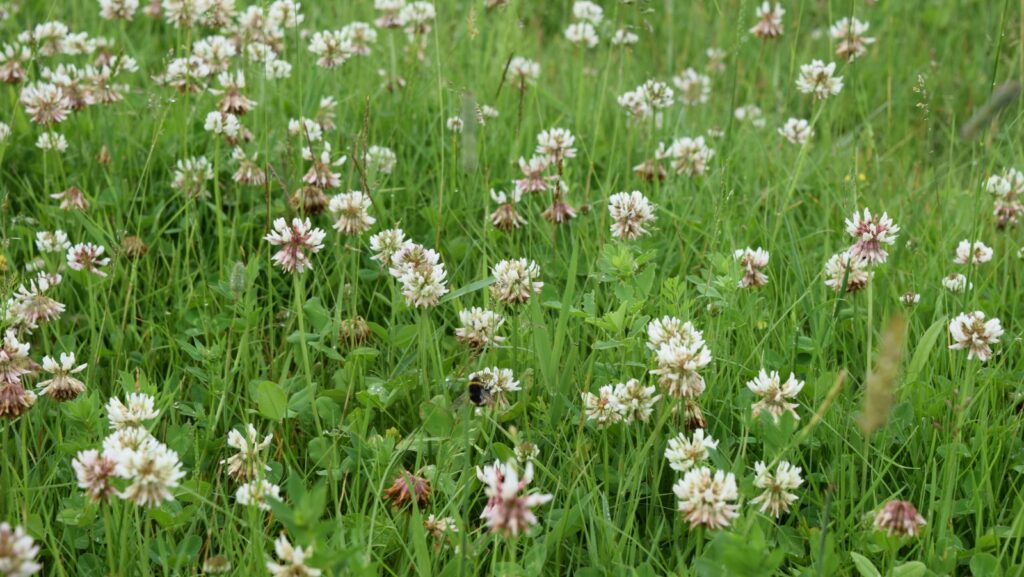
Competitor “species‑rich” turfs contain 70–80% grass
To make turf strong enough to harvest:
- Growers must include a high proportion of grass
- Wildflowers become a minority component
- Grass outcompetes wildflowers after installation
- Biodiversity declines rapidly
But a meadow cannot thrive when grass makes up 80% of the sward.
Provenance: Meadowmat Uses Verified, Responsible Seed Sourcing — Including UK Natives, Archaeophytes & Neophytes Where Ecologically Appropriate
This is one of Meadowmat’s most important ecological advantages.
Meadowmat uses known-provenance seed from Harrowden’s own controlled production
Harrowden’s approach is science-led and transparent:
- Many Meadowmat mixes use UK-native species
- Some mixes include archaeophytes (pre‑1500 introductions now naturalised)
- Others include carefully selected neophytes where they provide ecological or aesthetic value
- All species are chosen deliberately based on habitat type, ecological function, and intended use
So in essence this is a curated, scientifically justified species selection — not a cheap seed mix.
Why this matters
- Archaeophytes often behave like long-established natives and support pollinators
- Certain neophytes extend flowering windows or improve resilience in urban or disturbed sites
- All species are vetted for ecological safety and non-invasiveness
- Harrowden’s in-house propagation ensures traceability and genetic consistency
Competitor products often use cheap, non-native, or agricultural strains
Many commercial wildflower mixes:
- Use cheaper agricultural cultivars
- Include non-native species without ecological justification
- Lack provenance
- Risk the genetic pollution of local wild populations
- Are selected for ease of production, not ecological performance
In short, Meadowmat avoids these risks entirely through controlled, science-led seed sourcing.
Science-Led Development: Harrowden’s In-House Expertise
Harrowden invests in:
- PhD-level research
- Controlled trials
- Long-term ecological monitoring
- Species performance testing
- Soil and substrate optimisation
Fundamentally, this scientific oversight ensures Meadowmat performs consistently across real-world conditions — something competitor products cannot match.
Weed Suppression: Meadowmat’s Dense Root Structure Wins
The combination of:
- A mature sward
- Dense root mass
- Backing mat structure
…means weeds struggle to germinate.
As a result seeded meadows and competitor turf are far more vulnerable to weed invasion.
Biodiversity Outcomes: Meadowmat Delivers Genuine Ecological Value
Meadowmat is wildflower-led, provenance-controlled and root-intact, so it supports:
- Pollinators
- Invertebrates
- Birds
- Soil biodiversity
- Natural succession
Whilst competitor products behave more like lawns with flowers. Meadowmat behaves like a meadow.
Conclusion: Meadowmat Is Designed, Grown and Proven as a True, Science-Led Meadow System
Wildflower seed is slow and unreliable. Competitor “species‑rich” turf is fundamentally lawn turf. Not only that but cheap seed mixes also risk harming UK biodiversity.
Meadowmat is the only option that delivers:
- Verified provenance and controlled in-house seed production
- UK natives, archaeophytes and neophytes chosen for ecological purpose
- PhD-led scientific development
- Intact root systems
- Low grass content
- Instant establishment
- Long-term biodiversity
- Reliable, repeatable results
So for customers who want a meadow that works, Meadowmat is the clear choice.
Have a Question?
If you want to talk over your plans or discuss a bespoke seed mix or turf application please get in touch.
