
Leatherjackets are becoming more common...
…..and leatherjackets are on the rise.
Leatherjacket larvae can feed for longer during mild winters. Wetter soils during egg‑laying means that more eggs survive and since 2016 there have been fewer chemical treatment options available.
Natural predators have declined with increasing urbanisation which has encouraged the development of two‑generation lifecycles across leatherjacket species.
Leatherjackets are the larvae of crane flies that live in soil. They are grey‑brown, legless, and grow between 3–40 mm long. Plant roots and grass provide food. So they can be present in many gardens without causing problems and most lawns will contain some leatherjackets with no visible symptoms.
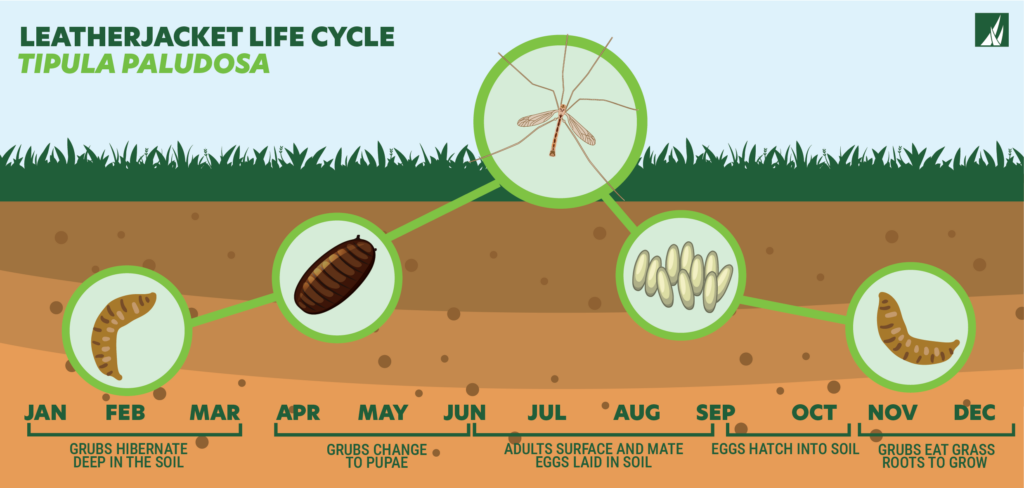
Leatherjacket species
Issues tend to arise when numbers increase or when the lawn is already under stress.
There are two main species that affect UK lawns – they are different and behave differently.
Tipula paludosa has a single lifecycle per year with adults emerging between August and September. Females lay eggs quickly and stay close to where they emerged. So, populations tend to build up in the same areas year after year.
Tipula oleracea enjoys two generations per year – May to June and August to September when females lay multiple batches of eggs over a longer period. Adults fly further, so populations are more spread out.
So, some lawns are experiencing repeated issues while others see only occasional or unpredictable outbreaks.
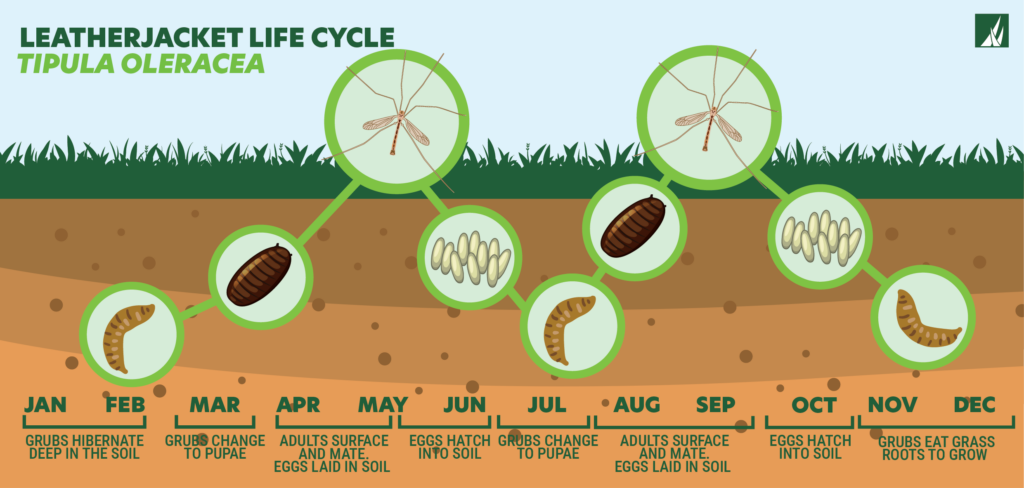
The Leatherjacket lifecycle
Leatherjackets lay their eggs in May or between August and October. They also lay their eggs at the base of grass stems. They then hatch fourteen days later.
In June and from the autumn and into winter the young larvae feed on roots so in mild winters they continue feeding and grow large enough to cause damage by late winter. By the spring and early winter, the damage becomes visible as lawns struggle to recover, By the summer the larvae will move deeper into the soil before pupating. So by late summer it may be possible to see pupal cases sticking out of the lawn as the new adults emerge.
Leatherjackets spend most of their life underground. The adult crane fly stage is brief. Damage will vary depending on the number of larvae and lawn condition but can include yellowing or thin patches; slow or patchy turf recovery inn the spring, turf lifting easily from the soil, bare or muddy areas and birds pecking or pulling at the turf. This is often the first visible sign.
Birds like starlings, crows and magpies can cause significant surface disruption while searching for larvae. This secondary damage can be more visible than the root‑feeding itself.
If the lawn is shallow-rooted then the damage is often worse. Drought, waterlogging or shade stresses the grass already, winter growth is slow and the larvae continue feeding.
Treatment
Biological Control (Nematodes)
Chemical Control (Acelepryn)
What to Expect in Future
In future we can expect some level of leatherjacket activity to be normal for UK lawns. The damage will vary from year to year depending on the weather and soil conditions. Recovery is achievable with the right cultural practices and as ever, early identification and timely action will give the best results.
Have a Question?
If you want to talk over your plans or discuss a bespoke seed mix or turf application please get in touch.
